
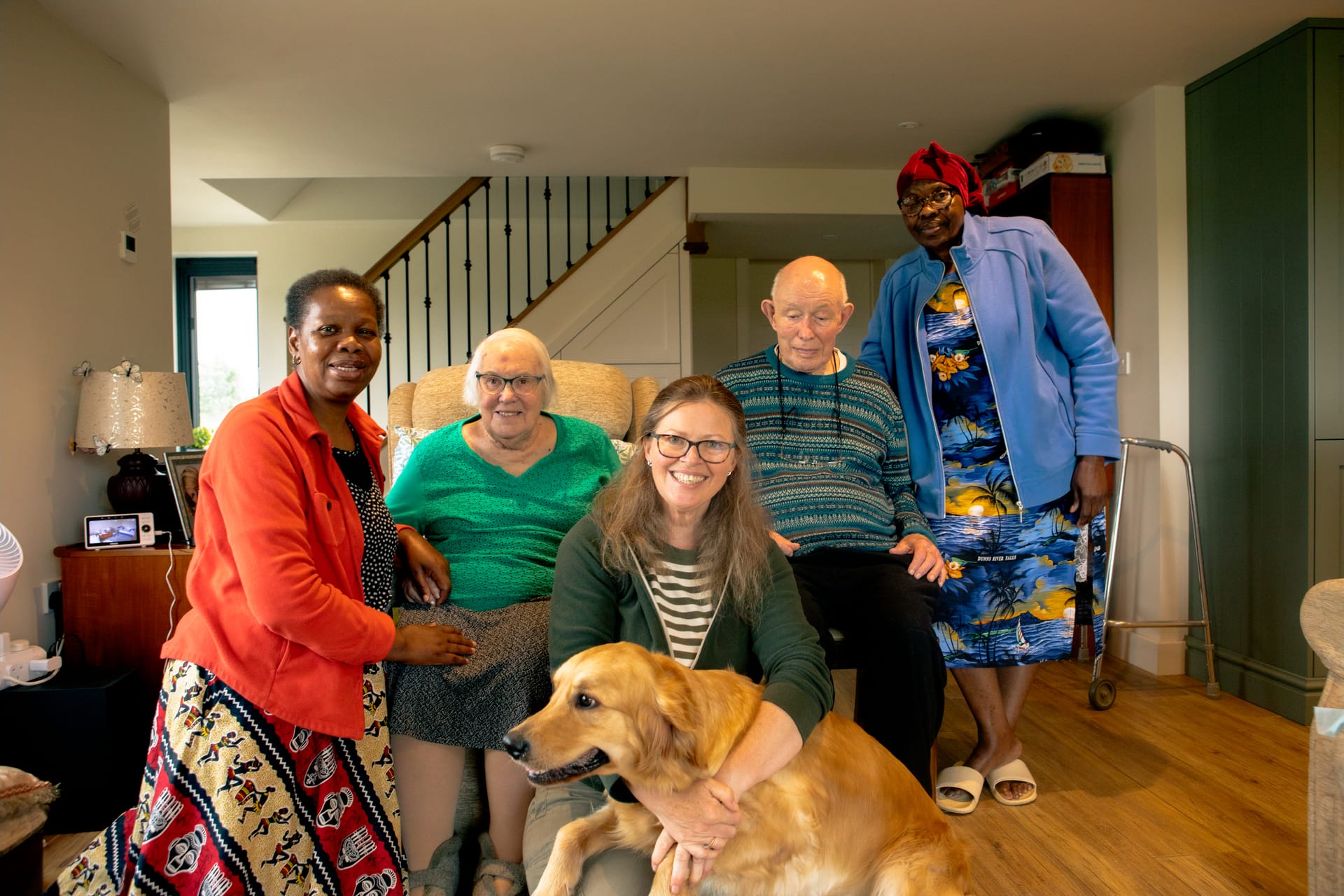
A familiar life, with someone beside you
A carefully matched carer lives in the home, offering one-to-one help, companionship and reassurance around the clock while the person keeps their routines, pets, neighbours and sense of home.
Daily life stays yours
The aim is not to take over. It is to make everyday life safer and more manageable while protecting choice, privacy and independence.
Help shaped around the day
A live-in carer can support washing, dressing, continence, medication routines, mobility, meals, shopping and household tasks. Every activity is agreed in the care plan, with the person encouraged to do everything they safely can for themselves.
More than tasks
Conversation, shared meals, outings, hobbies and quiet company are part of living well. Matching considers personality and interests as carefully as practical experience.
Reassurance at night
Night-time support is assessed honestly. Frequent waking or sustained clinical observation may require a different staffing plan from standard live-in care.
Planned breaks and cover
Carers need daily rest and planned time away. Cover is arranged with a clear handover so the household is supported when the regular carer rests.
Stay together at home
Where an assessment confirms it is safe, one live-in arrangement can support both partners without separating them from each other or their home.
A careful match, not a rushed placement
Good live-in care depends on clear expectations, a suitable home and a relationship that feels comfortable on both sides.
Understand the need
We listen to the person and family, including what is working, what has changed and what a good day looks like.
Assess at home
Health, mobility, cognition, routines, risks, night needs and the carer's living arrangements are reviewed.
Agree the plan
Responsibilities, breaks, communication and contingency arrangements are written clearly before care begins.
Introduce and review
We support the first days, stay in contact and adjust the plan when health or routines change.
What families usually ask
Could staying at home be possible?
Tell us what support is needed now. We will explain honestly whether live-in care looks suitable and what to explore next.